

Three years into his service at Barber-Scotia College in North Carolina, Chris Rey is at the halfway point of the average tenure for today’s college and university presidents. His career may be just beginning if he successfully resuscitates the HBCU.
After losing its accreditation in 2004, Barber-Scotia is slowly crawling back to federal recognition, having recently satisfied 14 of 17 standards by its accrediting agency. The college now awaits final audits surrounding its academic portfolio, funding and fundraising.
“I have 80 people who volunteer for Barber-Scotia College every day, and not one of them is getting a paycheck,” Rey says. “They believe in a vision of what this could be, and they, too, want to be a part of something legendary.”
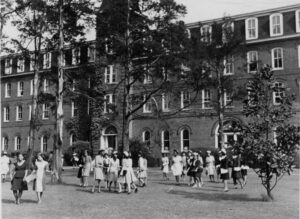
Barber-Scotia was the first historically Black female college in the South. It was founded in 1867—just four years after the Emancipation Proclamation—as a seminary school to prepare former slaves for service in education and social work, according to the school’s website.
Assisted by a new athletics department, enrollment climbed to 117 students last semester, a jump from just 10 in spring 2024. Learners are paying tuition out-of-pocket and with support from institutional scholarship funds.
Despite the “absolute risk” that current students and their parents knowingly take by enrolling at an unaccredited institution, Rey says he is certain the college will be accredited by the time they finish their credentials.
“A lot of families have come through Barber-Scotia over the last 159 years, but the class that walks across the stage when this college is accredited will be written in the annals of HBCU history,” he says. “Our students wanted to be a part of that.”
Rey’s highest priority now is establishing an academic identity that elevates Barber-Scotia’s appeal beyond its rich history. A former cybersecurity policy analyst for the U.S. Department of Defense, he envisions the college becoming an HBCU leader in data analytics and artificial intelligence.
That expertise, he says, could allow Barber-Scotia to partner with surrounding HBCUs in North Carolina by sharing administrative resources and academic programs. This model could help smaller, budget-restricted institutions specialize in its academic strengths while supporting a broader, interconnected ecosystem.
“It’s about trying to reimagine what the future of these institutions can look like, so that we can still preserve our legacies and not feel like we have to be all things to everyone,” he says. “It’s just too many resources out here to be able to not think like that.”
Rey hopes to connect Barber-Scotia with six HBCUs in North Carolina that fall outside the University of North Carolina system, including Shaw University, Bennett College, Livingstone College and more.
Rey’s progressive attitude toward partnerships mirrors developments across the country. The Community Solution Education System binds institutions through a central administrative resource. Similarly, some regional college presidents are embracing more robust course-sharing models and articulation agreements.
The next order of business for Barber-Scotia is to raise funding after losing the bulk of its donor base two decades ago. The 144K Collective, a philanthropic organization, started a “micro-giving” campaign on behalf of the college. The goal: collect $1.44 from 144,000 people to reboot the first historically Black female institution of higher education established after the American Civil War.
“Microgiving builds confidence in givers while providing an opportunity to showcase what we’re doing and that we’re doing right by the dollars given to us,” Rey says.
Through crowd-sourced funding and Rey’s professional connections, Barber-Scotia is incrementally regrowing its reach.
“When I got here, we had no donor base,” Rey concludes. “Today, we have over 4,000 givers, and that base continues to grow almost every day.”