

Nearly half of Americans hold a degree or a short-term credential that earns them at least 15% more than those with only a high school degree, contesting the idea that college isn’t worth the tuition.
As of 2024, nearly 44% of Americans held a degree or short-term credential “of value.” That means they earn at least 15% or more than someone with only a high school diploma, the Lumina Foundation says in its latest “A Stronger Nation” report.
The cost of college is therefore less relevant to high school graduates than the earnings potential associated with a degree or credential, the Foundation contends.
Degree type largely influences future earnings. For example, among those who hold an associate degree, 54% make 15% or more than the national median annual salary of a high school graduate, compared to 80% of those who earned a graduate or professional degree.
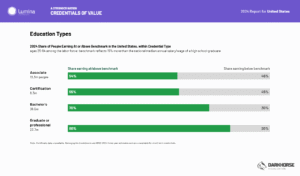
There is progress to be made, the researchers argue. By 2040, the Lumina Foundation wants 75% of adults to have a college degree or a credential of value. Here are some quick takeaways for leaders tasked with ensuring students have a clear path to postsecondary success:
- A bachelor’s degree remains the most consistent pathway to high earnings.
- The value of credential vary widely. Students must be pointed toward credentials that align with current labor market needs.
- Despite the rising cost of college, 54.8% of adults have a postsecondary credential or degree, a nearly 17% increase in attainment since 2009.
Still, an NBC News poll published in November revealed that only a third of registered voters believe a four-year college degree is worth the cost. Meanwhile, 63% say it’s “not worth the cost because people often graduate without specific job skills and with a large amount of debt to pay off.”
Read the report here.
More from UB: AI-powered search is changing how students choose colleges