
John Hulen, Director of Vertical Marketing
It was a simple play on a buzzword that quietly rewired my thinking. I was speaking with a higher ed technology leader when he said something: “We don’t aim for future-proof. We aim for future-flexible.”
Future-flexible . . . that phrase stuck with me. It reframed how I think about planning, designing, and supporting technology in higher education. Because in education, where needs evolve faster than budgets, flexibility isn’t just a nice-to-have — it’s a mission-critical strategy. And it’s one that works best when the right people are working together.
So, who are the right people? In my mind, there are three crucial parties that must be involved for a successful, future-flexible, technology strategy. I call it the triangle defense. The triangle defense involves collaborative efforts between the three corners of the triangle: the educational institution, the technology integrator, and the tech manufacturer.
It’s through this collaboration that we are best positioned to meet and improve those 21st-century learning outcomes.
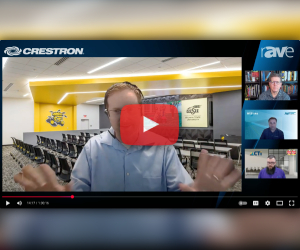
I recently joined a webinar, hosted by my friends at rAVe, where we brought all three members of the triangle defense together to talk about strategies for finding the right technology partners.
We wanted to have a conversation to help IT leaders and campus decision makers understand the importance of selecting the right technology providers. We got into the nitty-gritty with real-world projects, tips and traps, advice, and overall knowledge sharing.
After the conversation, I felt compelled to share my top takeaways.
Why collaboration outperforms cost-cutting
Cost-saving strategies like buying off-the-shelf devices online can be tempting when budgets are tight. It might look good on paper, but it often leads to a patchwork of mismatched components, inconsistent user experiences, support headaches, and higher costs down the line.
During our conversation, Ryan Corcoran of Wichita State University said, “If I want cheap prices, I can go to an online vendor for most things nowadays … but that doesn’t mean I get the same support.”
Since I come from the AV manufacturer tip of the triangle, it’s so validating to hear the university value an area where Crestron invests in so many resources. We’ve spent over 50 years building a world-class support structure known as the True Blue Way. True Blue is an uncompromising commitment to our partners, customers, employees, and industry as a whole. It was founded on a belief in support and collaboration through partnership.
Meeting the needs of the space
Jeffrey Frank from CTI said something during our conversation that cannot be overstated:
“Not every room needs to be a $100,000 classroom. Sometimes it’s just a display with a few sources. When we collaborate, we can meet the needs of the learning space without compromising the student experience.”
Some technology integrators may be tempted to oversell — either to impress stakeholders with high-end specs or to increase the size of the order. But a true technology partner focuses on what the space actually needs to support teaching and learning.
A learning lab is expected to be used in a very different way than a traditional classroom. Therefore, it will likely get a larger technology investment because that is what’s needed for teachers to teach and students to learn.
A strong triangle defense helps explain that distinction to stakeholders. It gives the AV team the support they need to advocate for the right solutions — solutions that are tailored, not templated. That way, institutions avoid overspending on unnecessary tech while ensuring every space is equipped to support meaningful learning experiences.
Evaluating technology vendors
One of my favorite segments during the webinar was when Corcoran described his process for evaluating technology vendors. It was a perfect example of the importance of strong partnerships between institutions and technology providers. Here’s how he described it:
“Literally what I did is I did one project with four or five different integrators. I looked at the experience — what kind of equipment did they specify, what was the quoting process like, what was the installation process like, the follow-up, the support — all those things. And I just kind of mentally rated all of them and said, ‘Okay, priority-wise, I’m going to put this integrator over this one over that one.’ And that’s how I built my list.”
What I love about Ryan’s approach is that it wasn’t just about price or product — it was about the experience. He was evaluating not just what vendors delivered, but how they delivered it. Were they responsive? Did they understand the needs of the space? Did they act like a partner or just a supplier?
That’s the kind of thinking that builds strong, lasting relationships. Because in higher ed, where refresh cycles can span six to ten years and support needs don’t end when the invoice is paid, you need more than a vendor. You need a team that’s invested in your success.
Speaking the same language
It was a genuinely fun conversation. Even though it was my first extended discussion with Ryan and Jeffrey, what struck me most was how naturally aligned we were in our thinking. We each brought different skills, backgrounds, and perspectives to the table. But without even naming it, we were all operating within the same model: the triangle.
That’s the beauty of this approach. Whether you’re on the campus side, the integrator side, or the manufacturer side, when the partnership is strong, you find yourself speaking the same language — focused on outcomes, grounded in trust, and committed to doing what’s right for the space, the people, and the institution.
We covered far more in the webinar than I could capture in this article — from firmware updates to refresh cycles to the occasional “Edison plug re-engaged” moment. If you’d like to hear the full conversation, you can watch the webinar on demand here.
If you’re designing AV solutions for your campus, I invite you to explore our library of ready-made design ideas to inspire your next space on campus.
Learn more about how Crestron partners with higher education institutions to build smarter, more flexible, and more sustainable learning environments.