

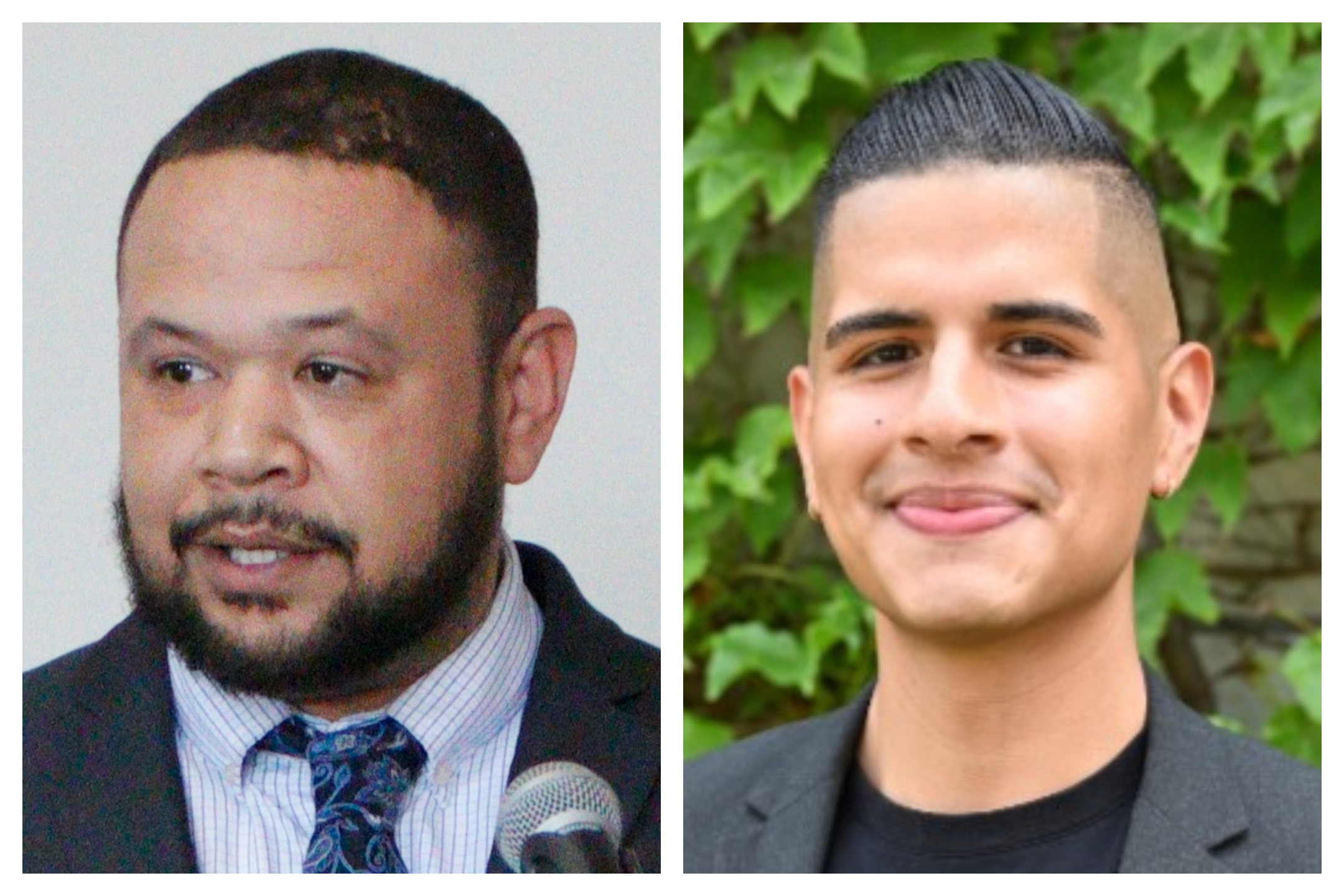
Early in our careers, neither of us imagined that a clinical model designed to support behavior change would become foundational to our work in higher education.
One of us began in mental health, trained in motivational interviewing, and worked with individuals experiencing homelessness and addiction. The other built a career leading student-success initiatives for first-generation and underrepresented students.
Despite these different starting points, we kept encountering the same reality: student success is not a static outcome. It is a process of change.
Retention dashboards, early-alert systems, and predictive analytics all matter. But those of us working most closely with students know that persistence does not happen because a resource exists. It happens because a student is ready to engage in it.
The Stages of Change model offers a framework for understanding that readiness. Originally developed by Prochaska and DiClemente (1983), the model outlines five stages: precontemplation, contemplation, preparation, action, and maintenance.
Rather than viewing change as a single decision, it positions change as developmental and nonlinear
Who student success practitioners really are
A student success practitioner is not defined by title. Advisors, academic coaches, and retention staff share one thing: proximity to student change.
These professionals do not simply provide information. They interpret behavior. They help students learn how to learn, self-regulate, and belong.
Too often, student behavior is interpreted as resistance, apathy, or lack of ability. The Stages of Change framework invites a different question: What stage of readiness is this student in?
Current student success models often assume access equals utilization and that information alone drives behavior change. This overlooks a critical reality. Students engage with resources when they are developmentally ready to use them.
Without accounting for readiness, well-intentioned efforts can feel intrusive or overwhelming, especially for students navigating transitions in responsibility, workload, belonging, and self-efficacy. This misalignment creates a cycle where institutions expand resources without increasing effectiveness.
1. Precontemplation
In precontemplation, individuals do not recognize the need for change. In higher education, this can look like missed classes, academic probation, or disengagement with externalized blame.
One of us worked with a first-year nursing student at risk of removal from her program. When the approach shifted from problem-solving to reflective questioning, a key insight emerged: she strongly disliked math and science and had never connected nursing to those disciplines.
She was not resistant to support; she was misaligned in her understanding of the pathway. Through exploration, she changed her major to social work, regained confidence, and graduated. At this stage, awareness, not compliance, is the goal.
2. Contemplation
In contemplation, students recognize that something may need to change, but ambivalence remains. A first-year business major arrived with a 1.0 GPA. He acknowledged his trajectory was unsustainable but had not taken steps to change.
Rather than rushing him into interventions, we explored why he had chosen business. His answer, “to make money,” opened a deeper conversation about values.
Having grown up in foster care, he expressed a desire to support others with similar experiences. He changed his major to social work.
Within a year, his GPA rose from 1.0 to 2.4. He graduated with a 3.0. When practitioners mistake ambivalence for laziness, they often apply pressure that undermines intrinsic motivation (Ryan & Deci, 2023).
3. Preparation
Preparation is where intention meets structure. Students are ready, but not yet organized.
We recall a student whose indicators mirrored those of many struggling peers: low attendance, incomplete assignments, and poor grades. But unlike others, he was trying.
The missing piece was structure. He lacked a laptop and relied on memory for deadlines.
Once a loaner device was secured, we built a digital calendar with reminders and structured study blocks. The intervention focused on systems, not willpower.
Research shows improved outcomes when support aligns with readiness (Saeidi et al., 2024; Lapointe et al., 2023). In higher education, preparation-stage students benefit from scaffolding that translates motivation into routine.
4. Action
In the action stage, behavioral change is visible. One McNair applicant had improved his GPA to 2.9, just below the threshold. He was conditionally admitted.
What followed was structured support: advising, workshops, and supplemental instruction. By semester’s end, he exceeded a 3.0 GPA.
As coursework intensified, he adapted strategies, using study groups and memory techniques. His GPA rose to 3.3. Action is not stable. Without reinforcement, you can expect regression.
5. Maintenance
Maintenance is a sustained effort amid increasing complexity. During his junior year, as expectations expanded to include research and graduate preparation, we reduced structured support.
His performance dipped, not from inability, but overload. Support resumed, focusing on reflection and goal-setting. By senior year, he was mentoring others and later entered a Ph.D. program.
How to avoid oversimplification
Student engagement theory and self-determination theory have shaped student-success practice for decades. Engagement emphasizes participation, while self-determination theory highlights autonomy, competence, and relatedness (Ryan & Deci, 2023).
What these frameworks often lack is a temporal dimension, clarifying when strategies are most effective.
The Stages of Change does not replace these theories. It explains why tutoring fails when awareness is absent, why leadership programs overwhelm students in contemplation, and why success collapses when maintenance support disappears. Most importantly, it reframes student behavior from deficiency to developmental readiness.
We are careful not to overstate this model’s universality. Empirical validation in higher education remains limited, as most research originates in clinical contexts (Andrews et al., 2019; Racal et al., 2022).
Assessing readiness is complex, as behavior is shaped by financial stress, institutional climate, and structural inequities. Implementation also requires training and manageable caseloads.
Context matters across institutions, and students do not move linearly. Practitioners must avoid oversimplification.
Here are key takeaways for student success leaders:
- Student success efforts must shift from measuring access to evaluating readiness.
- Student success is a staged process driven by awareness, motivation, structure, and support.
- Institutions that treat student success as a change process move from reactive to proactive strategies that improve outcomes.
References
- Andrews, M., Choi, K., Sabado, M. 2019. Prevalence and Characteristics of Young Adult Smokers in the U.S. in the Precontemplation Stage of Smoking Cessation. Addictive Behaviors, 84, 167-170. https://doi.org/10.1016/j.addbeh.2018.04.008.
- Lapointe, J., Comtois, A., Romain, A., & Bernard, P. (2023). The Transtheoretical model’s processes of change in the heart of a physical activity intervention: A series of n-of-1. Psychology of Sport and Exercise, 67, 102430. https://doi.org/10.1016/j.psychsport.2023.102430
- Racal, S. J., Hengnalen, B., & Ketphan, O. (2022). Transtheoretical model (stages of change) and its potential applications to psychiatric and mental health nursing practice. International Journal of Public Health and Health Sciences, 4(2), 1–8. Retrieved from: https://www.tci-thaijo.org/index.php/ijphs
- Ryan, R.M., Deci, E.L. (2023). Self-Determination Theory. In: Maggino, F. (eds) Encyclopedia of Quality of Life and Well-Being Research. Springer, Cham. https://doi.org/10.1007/978-3-031-17299-1_2630.
- Saeidi, K., Ghavami, T., Shahsavari, S., Siabani, S., & Rajati, F. (2024). The effect of trans-theoretical model stage-matched intervention on medication adherence in hypertensive patients. Frontiers in Cardiovascular Medicine, 11, 1470666. https://doi.org/10.3389/fcvm.2024.1470666