
At the University of Southern Maine, we prepare students not just for work, but for a life of meaning, purpose and connection.
As a comprehensive university with more than 4,400 undergraduates and 1,800 graduate students, we are rightly proud of our excellence in professional fields like nursing, education, business, engineering and the sciences. But our foundation is made stronger, more humane and more enduring because of the arts and humanities.
From our acclaimed programs in music, theatre and visual arts, to the study of literature, history, politics and philosophy, the arts and humanities open minds, cultivate empathy and inspire creativity. These are not separate from the professions we prepare our students for: they are essential to them.
More from UB: How one big step for American well-being lies in small credentials
The University of Southern Maine graduates the most nurses in the state and we are morally obligated to make sure they’re the best nurses they can be. A nurse who has studied poetry may listen more closely.
An engineer who has drawn from art may see problems from a new angle. A teacher who has studied history will understand their students’ communities more deeply. A business leader who understands culture and storytelling will lead more wisely.
That is why I believe every one of our students, more than 90% of whom are not presently in an arts major, should experience the transformative power of the arts and humanities. This is central to who we are and who we aspire to be as a university.
With about 40% of our incoming class of Maine students hailing from rural communities, it is critical for us to provide a well-rounded, holistic education that students will take back to their communities. Graduates who will live and work in urban and suburban areas will understand the importance of supporting the arts in their communities and schools.
At this pivotal moment for higher education, the national landscape calls us to act boldly. Across the country, arts and humanities enrollments have declined in the face of pressures to demonstrate ROI and job-readiness.
According to recent data from the National Center for Education Statistics, degrees in fields like English and history have dropped significantly over the past decade. Meanwhile, state funding formulas increasingly reward professional degrees with high job placement statistics.
In this context, recommitting to the humanities is not nostalgic: it is strategic. It is a statement of belief that students need both practical skills and deeper intellectual grounding to navigate an uncertain world.
A strategic vision, not just a humanities building
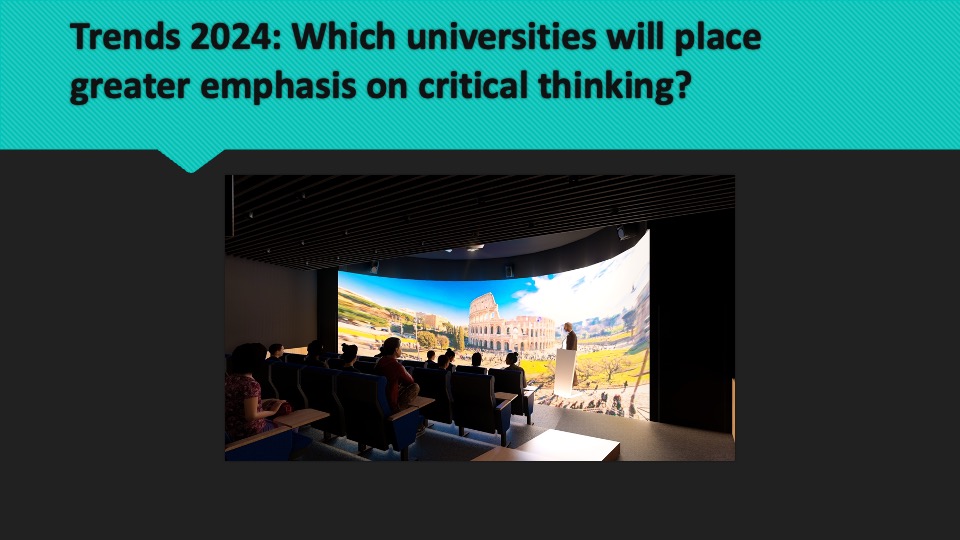
Our new Crewe Center for the Arts, which opens in September 2025, will be a vibrant home for this vision. Through this facility, every student will have opportunities to meaningfully engage with the arts.
With more than 40,000 square feet of space to serve the community year-round, the Crewe Center for the Arts will make this vision a reality.
My commitment is that every student will have an opportunity to attend performances and exhibitions, take part in lessons, ensemble, and studio experiences, and connect with the extraordinary creative community of southern Maine.
Whether it’s in the outdoor sculpture garden, the 200-seat performance hall, the multipurpose arts lab, or the flex studio—home to the Kate Cheney Chappel ’83 Center for Book Arts—all students, including our local K12 students, will have the opportunity to interact with and be transformed by the arts.
But this is more than a capital project. It is an institutional strategy. Our investment in the Crewe Center is part of a broader commitment to integrate the arts and humanities across disciplines, general education and student life.
This means creating incentives for faculty collaboration, opening space in the curriculum, and strengthening our community partnerships. It also means rethinking our recruitment narrative: for rural, first-generation, and working students, the arts must be accessible, relevant, and clearly connected to their hopes for the future.
This is not ornamental work. It is essential to building an inclusive, equity-centered public university.
Integrating mission with strategy
By investing in the arts and humanities, we invest in the wholeness of every student we serve, in the soul of our university and in the future of our society.
The language of moral obligation resonates deeply, but it must also be paired with strategic clarity. Institutions that sustain their arts and humanities programs in the current environment are those that make a clear case for their relevance.
The research is clear: employers value communication, critical thinking and cultural fluency. Those are the very attributes cultivated through the arts. As reported in the National Association of Colleges and Employers annual survey, these so-called “soft skills” consistently top the list of employer priorities.
The University of Southern Maine’s model offers a public university blueprint: embed the arts into workforce preparation; ensure physical spaces serve both curricular and co-curricular goals; and use storytelling to shift the narrative from “extras” to “essentials.”
What others can learn
This is not an approach to be replicated wholesale, but it is a strategy others can adapt. Public universities across the country are wrestling with the same pressures: how to meet regional workforce needs, support historically underserved students and stay financially sustainable.
Our approach suggests that integrating the arts and humanities can help address all three. For those leading regional or rural institutions, a few principles apply:
- Make the arts visible and central, not peripheral.
- Connect artistic experiences to general education and career readiness.
- Build spaces that invite collaboration across disciplines.
- Partner with K12 systems and local arts organizations to grow the pipeline.
If we want our students to thrive, we must show them that creativity, reflection and civic imagination are not distractions from the future; they are the future.